


Know Your Customer (KYC) Software Accurate APAC KYC Business Identity Verification
Eliminate Blind Spots
Onboard Individuals with Confidence

Screen for Risk Instantly
Check individuals against PEPs, sanctions, watchlists, and adverse media in real time.

Accelerate Onboarding
Cut false positives and automate KYC processes with AI and machine learning.

Developer friendly API
Accurate Individual Verification Across APAC in Seconds.

Scale Securely Across APAC
Rely on robust infrastructure built for high-volume onboarding, fully translated and audit-ready.
How Our KYC Solution Works Verified Identity Data, Built for Compliance
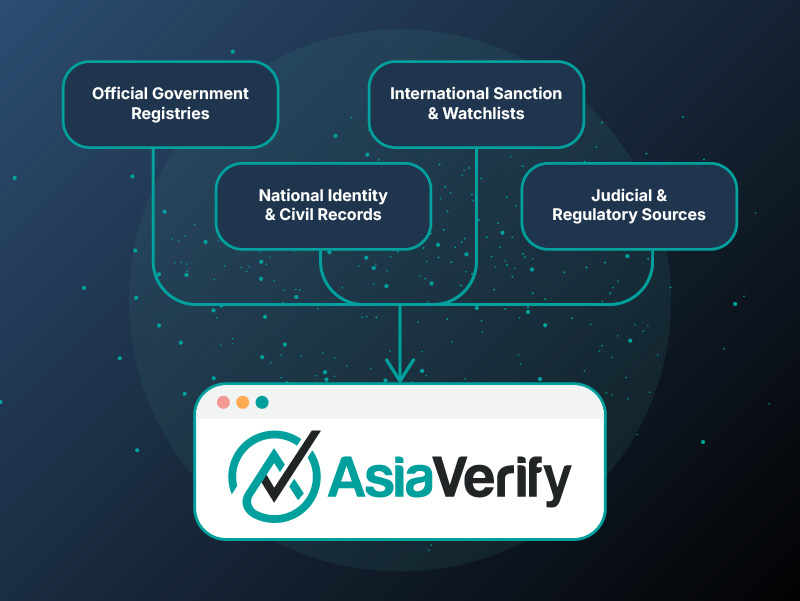
Each record is delivered with original source information plus instant English translations, giving you audit-ready trails and reliable assurance across borders. For KYC checks, that means accurate onboarding, fewer false positives, and confidence that every decision is backed by trusted data.
How Our KYC Solution Works AI-Powered Accuracy
The system resolves mismatches, aligns identifiers across jurisdictions, and flags risk signals in real time. Compliance teams can cut manual review, reduce false positives, and act faster with decision-ready data.

How Our KYC Solution Works Flexible Delivery, Seamless Integration
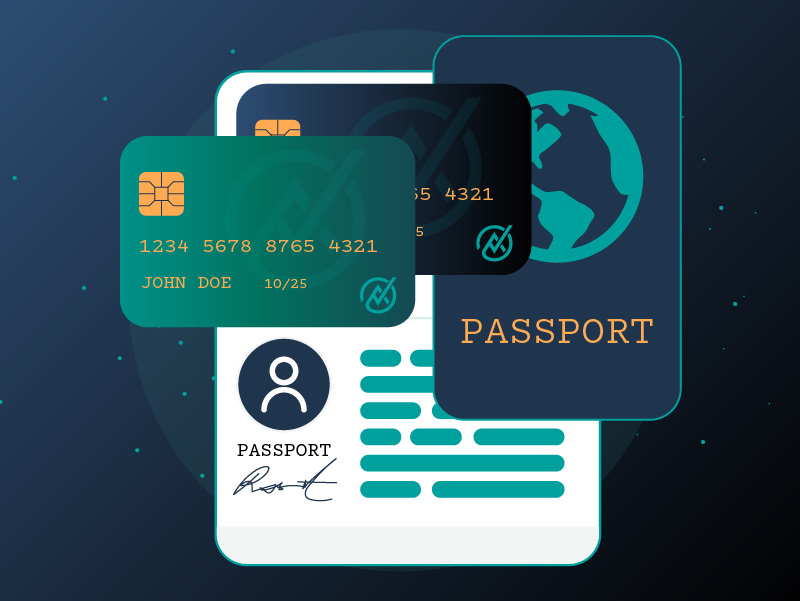
Whether you need real-time checks or batch processing, every option provides the same trusted registry and AML-backed identity data—ready to plug into your onboarding, fraud prevention, or compliance processes.

Get the KYC data you need.
Tailored Identity Verification That Solves Your Day-to-Day Challenges A KYC Solution Built for Your Industry
 Financial Service
Accelerate Onboarding and Stay Compliant
Financial Service
Accelerate Onboarding and Stay Compliant
Smarter Onboarding and Risk Management Across APAC
AsiaVerify connects financial institutions to real-time APAC registry data for KYB, UBO, and AML checks.
Onboard customers faster, detect hidden risks, and meet global and local regulatory standards with confidence.
 FinTech & Payments
Move Faster Without Compromising Risk Controls
FinTech & Payments
Move Faster Without Compromising Risk Controls
Onboard Businesses With Confidence
Verify merchants, partners, and counterparties quickly while meeting local AML and KYB obligations across Asia-Pacific.
AsiaVerify helps reduce onboarding friction, uncover hidden ownership, and continuously monitor risk as your platform scales.












I have worked in fraud investigations and due diligence for over 25 years - AsiaVerify is one of the best tools I have ever used for corporate research.

Insights and Guidance to Strengthen Your Compliance Strategy Know Your Customer (KYC) Resources
 Read more about AsiaVerify Accelerates Asia-Pacific RegTech Innovation with Expanded Platform for Smarter Onboarding and Monitoring at SFF 2025
AsiaVerify Accelerates Asia-Pacific RegTech Innovation with Expanded Platform for Smarter Onboarding and Monitoring at SFF 2025
AsiaVerify showcases new KYB, UBO, and monitoring tools at SFF 2025 to support faster, smarter onboarding.
 Read more about Navigating Hong Kong’s New Credit Data Landscape with the MCRA Model
Navigating Hong Kong’s New Credit Data Landscape with the MCRA Model
Learn how the MCRA model changes credit data access and KYB practices in Hong Kong
 Read more about Visa: From AI to RTP top trends shaping 2025 payments
Visa: From AI to RTP top trends shaping 2025 payments
Visa highlights 2025 payment trends, including AI innovation and real-time payments shaping the industry
 Read more about Merchant verification in the fast-lane
Merchant verification in the fast-lane
Speed up merchant KYB without cutting corners—learn how real-time tools reduce onboarding risk
Ready to See Our KYC Solution in Action? Want to See How Fast, Accurate Screening Really Works
KYC FAQs
What is KYC
KYC stands for Know Your Customer — the process of verifying the identity of an individual before or during a business relationship. It is a core compliance requirement for financial institutions, payment platforms, and any organisation that onboards individuals as customers, merchants, or partners. For organisations operating across Asia, KYC is both a legal obligation and an operational challenge. Identity data structures vary significantly by market — what works in Singapore does not apply in China, India, or Malaysia. Coverage, accuracy, and source quality matter as much as the process itself.
What does KYC stand for?
KYC stands for Know Your Customer. The term originates from financial regulation, where it describes the obligation on banks and financial institutions to verify the identity of clients before providing services. Today the scope extends well beyond banking — KYC applies across payments, insurance, corporate onboarding, and any regulated activity involving individual identity verification. It sits at the foundation of anti-money laundering programmes worldwide.
How does KYC work?
KYC works by collecting identity information from an individual — name, date of birth, government-issued identification — and verifying it against authoritative sources such as national identity registries or government databases. Automated KYC platforms replace manual document review with real-time API queries to in-country data sources, producing a structured, decision-ready output that compliance teams can act on immediately. This removes processing delays, reduces human error, and allows organisations to scale identity verification without adding headcount.
What is KYC compliance?
KYC compliance refers to an organisation’s adherence to regulatory requirements that mandate the verification of customer identities. These requirements exist across most regulated industries and are enforced by financial regulators in each jurisdiction. In practice, compliance means operating a formal Customer Identification Programme, verifying identities against reliable and independent data sources, conducting due diligence on individuals and their beneficial owners, and maintaining records that can withstand regulatory scrutiny. In cross-border contexts — particularly across Asia — compliance complexity increases because each jurisdiction operates its own identity infrastructure and regulatory framework.
What are KYC requirements?
KYC requirements vary by jurisdiction and industry, but most regulatory frameworks mandate identity verification, address verification, document validation, sanctions and PEP screening, risk classification, and ongoing monitoring. For businesses operating in Asia, these requirements are compounded by the diversity of identity systems across markets. China, India, and Indonesia each use distinct national identity frameworks that require separate data integrations to verify correctly — a challenge that generic global providers frequently fail to meet with the accuracy that regulators expect.
Why is KYC important?
KYC is the first line of defence against financial crime, fraud, and regulatory exposure. Without a reliable KYC process, organisations cannot confirm who they are doing business with — creating risk at every point of the customer relationship. The consequences of inadequate KYC include regulatory fines, the onboarding of fraudulent or sanctioned individuals, reputational damage, and operational disruption from failed audits. Beyond risk mitigation, a well-implemented KYC process enables faster onboarding, reduces manual review queues, and allows compliance teams to scale operations without a proportional increase in cost or headcount.
What is the KYC process?
The KYC process is the structured sequence of steps an organisation follows to verify the identity of an individual and assess the risk they represent. It typically begins with customer identification — collecting name, ID number, date of birth, and address — then moves through document verification, database checks against sanctions lists and PEP registers, risk assessment, and ongoing monitoring. Organisations that treat these stages as a continuous workflow rather than a one-time onboarding check achieve more reliable compliance outcomes and detect changes in individual risk profiles significantly earlier.
What is KYC due diligence?
KYC due diligence refers to the depth of investigation applied to an individual during the verification process, calibrated to their risk level. Standard Customer Due Diligence confirms identity and basic profile for lower-risk individuals. Enhanced Due Diligence applies to higher-risk cases — politically exposed persons, individuals in high-risk jurisdictions, or those connected to complex ownership structures — and requires deeper investigation of source of funds, business relationships, and ongoing activity. In APAC markets, Enhanced Due Diligence is frequently triggered by the complexity of ownership structures and the limited availability of reliable identity data in certain jurisdictions.
What is the difference between KYC and KYB?
KYC and KYB are related but distinct verification processes. KYC — Know Your Customer — focuses on verifying individuals: directors, beneficial owners, and customers. KYB — Know Your Business — focuses on verifying entities: companies, partnerships, and organisations, using corporate registry data to confirm registration status, legal structure, and ownership. In practice the two are deeply connected. Verifying a business without verifying the individuals who own or control it leaves a significant gap in due diligence. Complete onboarding requires both — and a platform that handles the full lifecycle from entity verification through to individual identity checks and ongoing monitoring.
What is the relationship between AML and KYC?
AML — Anti-Money Laundering — and KYC are closely related but serve different functions. KYC is the process of verifying who someone is, establishing identity at onboarding and supporting ongoing risk classification. AML is the broader framework of controls designed to detect, prevent, and report financial crime — including transaction monitoring, suspicious activity reporting, and sanctions screening. KYC feeds AML: without reliable identity verification, transaction monitoring and risk scoring have no reliable baseline to work from. Regulators treat KYC deficiencies as AML failures, which is why identity verification is the starting point of every effective compliance programme.
What is digital KYC?
Digital KYC — also referred to as eKYC — is the process of verifying an individual’s identity electronically, without physical document submission or in-person review. It works by querying national identity databases via API in real time, matching submitted data against registry records, and returning a verified, structured output to the requesting system. For businesses scaling onboarding across Asia, digital KYC is a necessity rather than an option. The volume of individuals requiring verification cannot be processed manually at scale — eKYC reduces onboarding time from days to seconds and produces consistent, auditable results across every market where it is deployed.